
A lot of people hesitate to get into construction because they assume they need years of experience right away. That is not usually how it works. Most professionals start in entry-level roles, learn the day-to-day realities of the job, and build toward positions like project management from there.
At Cardinal Civil Contracting, we see how different experience levels come together on active job sites, from new hires learning the basics to experienced teams managing complex projects. Our guide is designed to help people looking for how to get a job in construction know what level of experience you’ll need for a variety of different roles.
Entry-Level Laborer and Field Support Construction Jobs
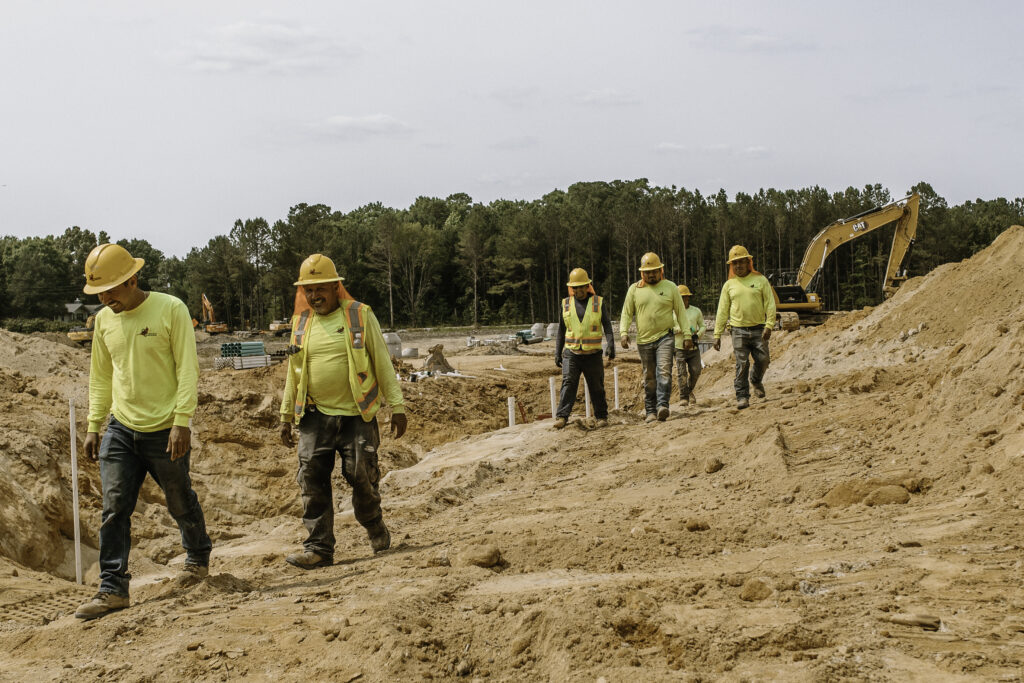
Most construction careers begin in entry-level roles where you get a clear view of how a job site functions. This is where you learn how crews work together, how tasks are organized, and what is expected on a day-to-day basis. At this stage, consistency showing up and a willingness to learn from experienced workers matters more than prior experience.
Experience Typically Required
- No prior construction experience required in many cases
- Ability to perform physical work in outdoor conditions
- Willingness to follow direction and safety protocols
- No formal education required
What You’ll Do on the Job and How to Stand Out Early
For entry level construction jobs, the focus is on learning by doing. You will assist with site preparation, material handling, and general support tasks while observing how more experienced crew members approach their work. Over time, you begin to understand how different parts of a project connect, from grading to utility installation.
What separates strong entry-level job candidates is reliability and attitude. Employers notice individuals who take the work seriously and adapt quickly to changing job site conditions.
Typical Salary Range
- $35,000 to $50,000 per year
- Hourly equivalent often ranges from $17 to $24 per hour depending on location and overtime
- Overtime and seasonal demand can increase total earnings
How We Support Entry-Level Construction Careers
At Cardinal Civil Contracting, we bring entry-level team members into active job site environments where they can learn how work is actually performed. Our team-based approach and hands-on project work allow new hires to build foundational experience early.
Heavy Equipment Operators and Skilled Field Roles
After gaining initial field experience, many workers move into more specialized positions. These roles require a better understanding of how construction tasks are executed and how equipment is used to complete work accurately and efficiently.
Experience Typically Required
- 1 to 3 years of field experience
- Basic familiarity with construction workflows
- Experience assisting with or operating equipment
- No degree required, though equipment certifications or on-the-job training may be needed
Operating Responsibilities and Skills That Set You Apart
In these roles, you are more directly responsible for the quality and precision of the work being performed. This can include operating heavy equipment for grading and excavation, assisting with layout work, or supporting utility installation. The work becomes more technical, and expectations around accuracy and efficiency increase.
Strong candidates at this stage understand how their work impacts the overall project. Instead of focusing only on individual tasks, they think ahead and communicate with supervisors and teammates. Being dependable under time constraints and showing awareness of how different phases of the project connect can help you move into leadership roles more quickly.
Typical Salary Range
- $45,000 to $75,000 per year
- Experienced operators may earn $22 to $35+ per hour depending on equipment type
- Specialized equipment experience can increase pay over time
How We Help Equipment Operators Build Experience
As our team members at Cardinal Civil gain experience, we provide opportunities to work across different types of site development projects, including grading, excavation, and infrastructure work. This exposure helps operators build confidence with equipment while understanding how their work fits into the larger project. Over time, that experience can support growth into more advanced roles.
Supervisors and Crew Leaders
Foremen connect the work happening in the field with the expectations set by project management. They are responsible for keeping construction crews organized, making sure tasks are completed in the right order, and addressing issues as they come up throughout the day. The role requires staying aware of both progress and job site conditions so work continues safely and on schedule.
Experience Typically Required
- 3 to 5+ years of hands-on construction experience
- Proven ability to lead or guide other crew members
- Strong understanding of job site processes
- No formal degree required; advancement is typically based on field experience and leadership ability
Leadership Responsibilities of an Effective Foreman
As a foreman, your role shifts from completing tasks to managing how those tasks are carried out. You are responsible for assigning work, coordinating equipment and materials, and making real-time decisions to keep progress moving. Communication becomes a major part of the job, both with your crew and with project managers.
What sets strong foremen apart is their ability to lead under pressure. They understand how to balance productivity with safety and can adjust when conditions change. Experience plays a major role in working as a forman at construction sites, especially the ability to recognize potential issues early and address them before they affect the project.
Typical Salary Range
- $60,000 to $90,000 per year
- Some roles include bonuses tied to project performance or productivity
- Pay can vary based on crew size and project complexity
How We Support Leadership Development in the Field
As team members move into leadership roles, we place a strong emphasis on communication, coordination, and accountability. Foremen at Cardinal Civil are expected to stay closely connected to both field operations and overall project expectations, which requires a clear understanding of how the work is actually performed. This helps experienced crew members step into roles where they are responsible for managing people, timelines, and daily production.
Assistant Project Managers (APMs)
By the time someone steps into an assistant project manager role, they are no longer just learning how work gets done. They are expected to understand how different phases of a project connect and where issues are likely to come from. This usually comes from several years spent in the field or supporting crews, not just classroom knowledge.
Experience Typically Required
- 3 to 7 years of construction or field experience
- Familiarity with project coordination and documentation
- Exposure to scheduling, budgeting, or reporting processes
- A degree in construction management, civil engineering, or a related field may be preferred by some employers, but is not always required
Project Coordination Responsibilities and Growth Opportunities
APMs track progress, coordinate schedules, and manage communication between crews, subcontractors, and project leaders. They are also involved in documentation, permits, cost tracking, and other administrative responsibilities. The true value a candidate will bring to this job is understanding how those details affect what is happening on-site, which can only be demonstrated through applied experience. The ability to connect planning with real jobsite conditions is what prepares an APM to eventually step into a lead project management role.
Typical Salary Range
- $65,000 to $95,000 per year
- Entry-level APM roles may start closer to $60,000 depending on experience
- Bonuses or performance incentives may be included
How We Develop Assistant Project Managers
As team members step into coordination roles, we involve them in jobsite operations and project planning. This helps our APMs see how decisions are made and how they impact the job as it progresses. That connection between planning and field experience helps prepare them for increased responsibility at Cardinal Civil over time.
Civil Construction Project Managers
Project managers are responsible for the full scope of a construction project, from initial planning through completion. By this stage, a high level of experience, built through years of involvement in different roles, is required.
Experience Typically Required
- 5 to 10+ years of construction experience
- Background in field roles, supervision, or coordination
- Proven ability to manage projects, timelines, and teams
- A degree in construction management, civil engineering, or a related field may be preferred, especially for larger or more complex projects
Full Project Oversight and High-Level Decision Making
Construction project managers oversee timelines, budgets, crews, and communication across every phase of a job. The role requires making decisions that affect the entire project, not just individual tasks. This includes being able to handle the jobsite coordination with clients and subcontractors, and making sure work meets plans, timelines, and required safety and quality standards.
Strong candidates for project management jobs rely on experience gained over time in the field. They understand how different phases of construction connect and can anticipate challenges before they become larger issues.
Typical Salary Range
- $80,000 to $120,000+ per year
- Senior project managers on large infrastructure jobs can exceed $120,000
- Compensation may include bonuses based on project outcomes
How We Support Project Management Growth
At Cardinal Civil Contracting, our project managers work across a range of site development and infrastructure projects, which requires managing multiple moving parts at once. We support this by maintaining a strong focus on planning, communication, and coordination throughout each phase of a project. Our company stands by the long-term development of experienced professionals to continue building on their knowledge while managing complex work in the field.
Build a Career That Lasts with Cardinal Civil Contracting
A career in civil construction is built step by step. There is no shortcut, but there is a clear path. Starting in the field, learning how projects operate, and developing both technical and organizational skills will position you for long-term growth.
At Cardinal Civil Contracting, we offer an environment where that growth happens naturally. With a mix of hands-on work, technical projects, and opportunities across multiple service areas, our employees can gain the experience needed to move into more advanced roles over time.
If you are considering a career in construction, the most important step is simply getting started. Explore our career opportunities and contact us today or filling out our online contact form to learn more.